Fast response doesn’t happen by accident. It’s the result of planning, staffing, and systems that are intentionally built around urgency. While many mechanical service providers claim to offer 24/7 support, only a few are structured to respond quickly and consistently when it matters most.
Reliable vendors start with dedicated dispatch coverage, not ad-hoc call routing or voicemail trees after hours. When a system goes down, the ability to immediately answer the phone, assess urgency, and initiate dispatch can save hours of downtime. Facilities shouldn’t have to wait for a call-back while conditions worsen.
Another major differentiator is technician depth. Vendors with limited staffing may respond quickly to one emergency but struggle when multiple calls come in at once. In contrast, providers with larger, well-trained teams can mobilize multiple technicians simultaneously, ensuring that one client’s emergency doesn’t delay another’s response. This depth is especially critical for facilities operating across multiple sites or running mission-critical systems.
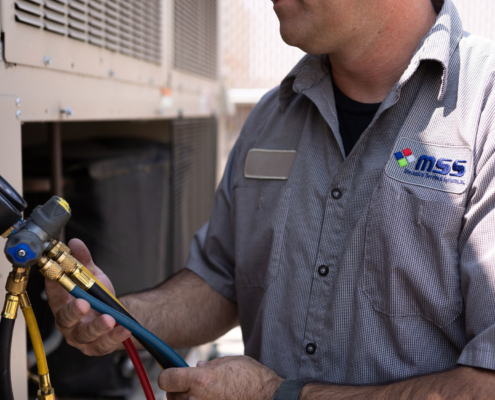
Fully equipped service vehicles also play a major role in reducing downtime. A fast arrival doesn’t help if a technician has to leave the site repeatedly to source parts or tools. Vendors who invest in well-stocked trucks and standardized equipment are better positioned to diagnose and resolve issues in a single visit, limiting disruption and restoring operations faster.
Finally, dependable vendors operate with clearly defined emergency protocols, not vague promises of availability. This includes documented escalation paths, after-hours procedures, and internal communication standards. When everyone knows their role during an emergency, response becomes predictable instead of reactive.
When these elements are missing, response time becomes inconsistent. Calls are delayed, technicians are stretched thin, and minor failures are allowed to escalate. Over time, this inconsistency increases operational risk, inflates downtime costs, and leaves facilities vulnerable when systems fail at the worst possible moment.